Graduate Tax – Tax LLM Program

As one of the oldest and largest programs of its kind in the nation, the Sturm College of Law's Graduate Tax Program is a leader in training tax specialists in the legal professions. Current lawyers and JD students in our LLM program train side by side with accountants from our Master's program to gain cross-disciplinary experience on aspects of tax. Our curriculum is nothing but tax, with courses taught using the Internal Revenue Code, treasury regulations, and other related material. The Graduate Tax Program prepares tax professionals for a career in tax.
Students can complete the Tax LLM program in a way that best fits their life and schedule. All Graduate Tax courses are delivered in an asynchronous online format that allows you to fit the program within your schedule, while also providing opportunities for live interaction with faculty and classmates and in-person events for those who are in the Denver area.
Students have the option to pursue their Tax LLM as a full-time or part-time student. Full-time students can earn a degree in just one academic year (over three terms) and part-time students generally finish the degree in 18-24 months. Most working professionals pursue their Tax LLM as part-time students to successfully balance all of their obligations.
Program Highlights
- A highly sophisticated and relevant course of study in taxation grounded in the Internal Revenue Code, treasury regulations, and materials developed especially for our program to enhance your understanding of the complex subject matter.
- A robust online learning platform where students can access course media and materials, submit work and quizzes, and interact with professors and other students. Classes are offered in an asynchronous format allowing maximum flexibility, with the exception of the Low Income Taxpayer Clinic, which can be taken online but requires synchronous online attendance.
- Outstanding faculty, including professionals from top local and national firms and the IRS.
- Study alongside law students.
- Full-time students can earn a degree in just one year; part-time students can earn a degree in 18-24 months. Either option is appropriate for working professionals.
- Excellent nationwide job placement opportunities through job postings, on-campus recruiting programs, alumni connections, and networking opportunities.
- Generous scholarships are available.
- Onsite and hybrid events, allowing students to enjoy in-person gatherings of students, alumni, and tax professionals. Ability to participate in online discussions with students in Denver and around the country.
- On-site and hybrid events to allow in-person connection with students, alumni, and practitioners.
- Opportunity for externships.
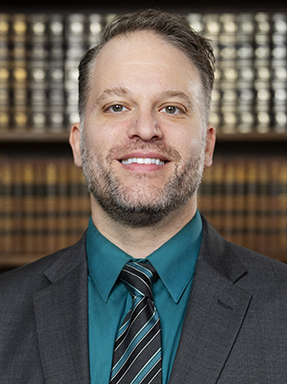
I attended the graduate tax program after four years of practicing regulatory law because I wanted to shift my practice area. In addition to taking classes, I had the opportunity to work on actual tax cases by participating in the Low Income Taxpayer Clinic, which allowed me to think about tax law from both a theoretical and practical perspective. I now feel confident about my ability to understand and analyze tax issues.
Prasanthi S. Paritala, JD, LLM'18, Law Clerk for the Honorable Judge Elizabeth Paris, U.S. Tax Court

Learn More
-
Degree Requirements
All students must successfully complete 24 semester credits and maintain a 2.7 GPA to earn their Tax LLM. Of those 24 credits, 16 of those credits come from eight (8) required courses: Federal Income Taxation (TAX 4000) (2 credits), Taxation of Property Transactions (TAX 4006) (2 credits), Corporate Taxation (TAX 4002) (3 credits), Partnership Taxation (TAX 4003) (3 credits), Tax Accounting (TAX 4035) (2 credits), Tax Research and Writing (TAX 4005) (2 credits), and Basic Tax Procedure (TAX 4004) (2 credits). The remaining credits can be earned by completing any elective courses. Please review all of our course offerings here.
-
Elective Paths
Students can take any combination of electives but should note some electives require prerequisites. These electives are part of informal paths. You can find prerequisite information here.
Corporate Path: Corporate Taxation (TAX 4003), Taxation of Corporate Reorgs and Divisions (TAX 4065), and S Corps (TAX 4015)
Estate Planning Path: Estate and Gift Taxation (TAX 4025), Estate Planning (TAX 4225), and Fiduciary Income Taxation (TAX 4125)
Tax Procedure Path: Basic Tax Procedure (TAX 4004), and Advanced Tax Procedure (TAX 4024)
-
Dual Degree Options
Denver Law students may earn a dual degree (JD and LLM in Taxation) and save time and money by enrolling in both programs concurrently. Please contact Ryan Dessler, Director of Admissions, Graduate and International Legal Programs, for more information.
-
Low Income Taxpayer Clinic
The Low Income Taxpayer Clinic (LITC) is one of largest and long-standing tax clinics in the nation. LITC is highly regarded in the Colorado tax and legal communities and is the preferred referral source for the U.S. Tax Court in Denver.
LITC represents low-income taxpayers before the Internal Revenue Service in audit, appeals, collections and Tax Court litigation. Representing over 250 clients each year, students participating in the clinic gain valuable practical skills handling client matters, researching individual income tax issues and working directly with the IRS and Colorado Department of Revenue.
All Sturm College of Law students are eligible to participate in the LITC for credit or as a volunteer. Please contact LITC Director Sabrina Strand for additional information. The LITC is available fully remotely, although synchronous participation is required for class times.
-
Specializations in Tax
Non-Degree Tax Micro-Credentials
For 40 years, the Graduate Tax Program at the University of Denver has been providing comprehensive training in tax law to lawyers and accountants through its LLM and Master of Taxation degrees. Now, with four distinct digital Badges—Corporate Taxation, Estate Planning, Pass-Through Entities and Tax Controversy—lawyers and accountants can gain expertise in specific tax fields without embarking on a full degree pathway. Successful earners of one or more Badges have the option of applying for the LLM or Master of Taxation degree and applying credits for one Badge to that degree if they pursue a full graduate degree.Other Non-Degree Options
Applicants interested in a limited amount of courses, and are not interested in pursuing a full degree, should reach out to Ryan Dessler, Director of Academic Initiatives and Advising, for more information to discuss options available for Special Status Students.
Graduate Tax Program Contact