Civil Rights Clinic 2026 Highlights

The Sturm College of Law’s Civil Rights Clinic (CRC) continued its work advocating for the rights and dignity of incarcerated people this past academic year. Through challenging and consequential litigation, CRC student attorneys worked to hold government officials accountable, advance civil rights, and challenge injustice within our legal system.
Clinical Teaching Fellow Transitions
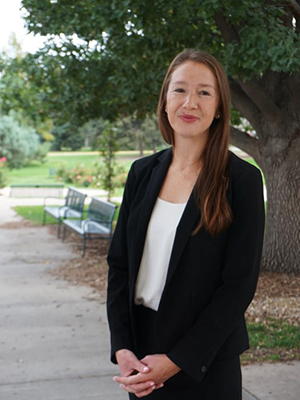
Congratulations to Miriam Kerler, the CRC’s 2023-26 Christopher N. Lasch Clinical Teaching Fellow, who was awarded her LLM in Clinical Legal Education in May 2026! After graduating, Miriam and former CRC student attorney Stephanie Frisinger co-founded the Summit Justice Law Firm, a women-founded, women-led social justice law firm dedicated to advancing civil liberties and improving access to justice for traditionally marginalized communities.
CRC Student Attorneys
Student attorneys Katherine Ewing, Kemiya Nutter, Oluwatomi Olasunkanmi, and Chloe Peters continued the CRC’s seven-year long representation of a man with intellectual disability and mental illness who has spent most of the last 30 years in solitary confinement. The team represented their client on multiple fronts, advocating to secure him postconviction relief and accommodations for his disabilities. On the postconviction front, the team (with their co-counsel) filed an appellate brief in the D.C. Court of Appeals, seeking to reverse district court’s denial of their client’s motion for sentence reduction under D.C.’s Incarceration Reduction Amendments Act (IRAA).

Additionally, the student team drafted and filed an appeal of their client’s administrative complaint with the Department of Justice’s Equal Employment Office for the Federal Bureau of Prisons, seeking accommodations under Section 504 of the Rehabilitation Act. Kemiya Nutter, who dedicated two years to representing her client, reflected that her experience “equipped me with the knowledge, compassion, and skills necessary to become a fierce and relentless advocate against state-sanctioned institutional violence. I am eternally grateful for the community I built with my CRC clients, colleagues, peers, and supervisors; I will be a better person and attorney because of them.”
After finalizing an Amended Settlement Agreement in the CRC’s long-standing case Disability Law Colorado v. Colo. Dep’t of Corrections (DLC), student attorneys Molly Engels and Kemiya Jenab-Nutter worked tirelessly to ensure their clients’ rights were protected under the agreement. The DLC case sought to correct rampant discrimination against Deaf and hard of hearing people incarcerated in the Colorado Department of Corrections (CDOC). With the amended agreement, CDOC agreed to do many things to eliminate the discrimination experienced by Deaf and hard of hearing people in its custody, including ensuring that Deaf people have access to interpreters, providing text-based notifications and visual and tactile alarms to allow Deaf and hard of hearing people to learn of announcement and emergencies, and ensuring that hard of hearing people are evaluated by an audiologist, provided hearing aids, and given prompt repairs or replacements when those hearing aids break or are lost. The amended agreement also requires an outside trainer, mutually agreed upon by the parties, who will assist CDOC in updating its training materials and processes relating to accommodations for, auxiliary aids and services for, and working with Deaf and hard of hearing individuals. The Amended Agreement also created a monitoring team meant to ensure that the changes are effectuated throughout all of Colorado’s prisons. During the Spring 2026 semester, Molly and Kemiya responded to complaints of violations of the agreement and worked with the monitoring team to continue implementation of its terms.

Student attorneys Alex Campbell, Molly Engels, and Mikayla Postma, under the supervision of CRC Teaching Fellow Miriam Kerler, represented their incarcerated client, an older adult with multiple chronic and severe medical conditions, in two actions seeking postconviction relief: a petition for clemency and a petition for Special Needs Parole (SNP). After the Colorado Department of Corrections (CDOC) initially denied their client’s SNP referral, they filed a lawsuit in the El Paso County District Court, asserting that the Department of Corrections’ denial constituted an abuse of discretion under the SNP statute. After they defeated CDOC’s motion to dismiss, CDOC determined that the client was eligible for referral to the parole board for SNP.
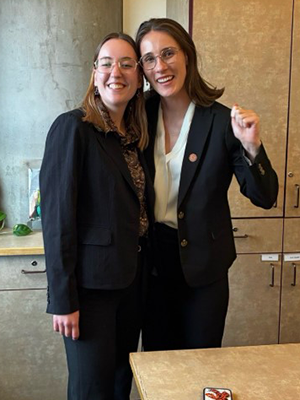
Advanced CRC student attorneys Rylee Beltran and Emma Richards continued their representation of a client who has consistently maintained her innocence for nearly 20 years, and as a result, has been denied sex offender treatment, which is the only way she may someday leave prison under Colorado’s lifetime supervision act. During the 2025-26 academic year, Rylee and Emma took and defended depositions, propounded and responded to written discovery, and engaged in significant motions practice, including arguing a discovery dispute before a federal magistrate judge. Reflecting on her decision to spend two of her three years of law school in the CRC, Emma explained, “my time in the CRC shaped me not only as a student attorney and civil rights advocate, but also as a person, providing a community of like-minded advocates who will remain a lifelong source of support and inspiration. The CRC challenged me every day to become the best I can be, and it is because of this experience that I am the attorney I am today.”
In 2025, the CRC, along with co-counsel from the ACLU, the Center for Constitutional Rights, Hecker Fink LLP, and the Law Office of Sara Norman, brought a lawsuit on behalf of 21 people challenging President Trump’s executive order directing that they should be incarcerated in the worst possible conditions in the federal prison system—ADX Florence—as a result of receiving commutations of their death sentences from former President Biden. Student attorneys Allyana Bradley, Mary Emmerling, and Jonathon Hill, along with their co-counsel, drafted the complaint filed in the U.S. District Court for the District of Columbia, as well as a motion for preliminary injunction. On February 11, 2026, the court granted the motion for preliminary injunction, finding that the plaintiffs had shown a likelihood of success on their claim that their transfers to ADX would violate the Fifth Amendment’s Due Process Clause.

CRC Faculty Highlights
Laura Rovner, Professor of Law
Director, Civil Rights Clinic
MICHAEL MUSHLIN, RIGHTS OF PRISONERS – 2026/27 Supplement (with Michael Mushlin) (forthcoming 2026).
Miriam Kerler, Christopher N. Lasch Clinical Teaching Fellow
The Right to Intimate Association in Prison: The Importance of Visits with Family and Friends, 100 TUL. L. REV. 953 (2026).