WP | WS 2027 Conference - Request for Speaker Proposals
The Rocky Mountain Land Use Institute invites you to submit a proposal to present at our 36th Annual Western Places | Western Spaces Conference on March 4-5, 2027 at the University of Denver's Sturm College of Law.
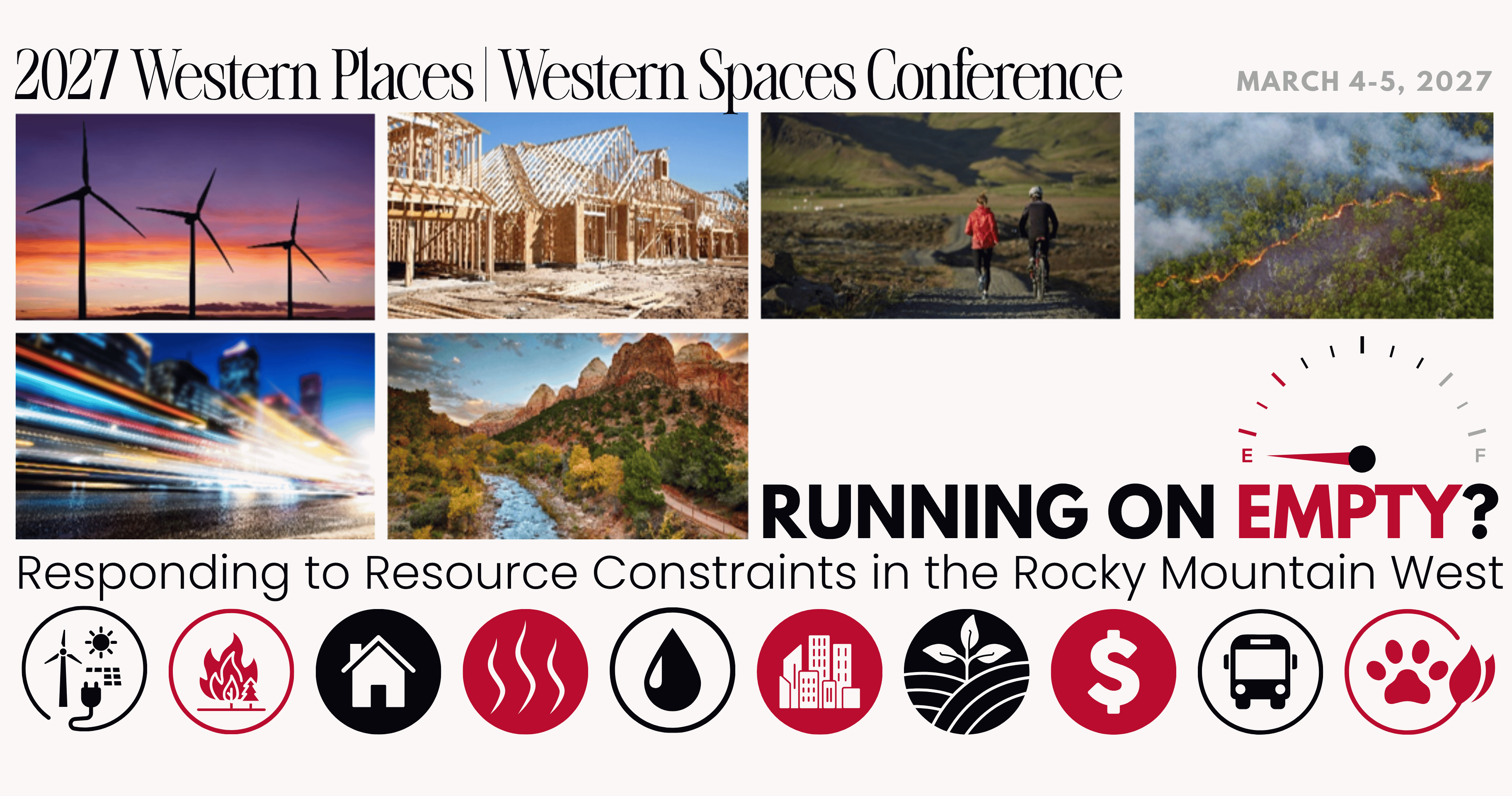
The Rocky Mountain West is at a critical crossroads. Defined by its breathtakingly broad landscapes and a frontier spirit of independence and expansion, the region is increasingly caught between the historic momentum of growth and the present reality of severe environmental, infrastructural, fiscal/economic, and regulatory limits.
Land use planning and resource management today feels less like charting a path of open possibilities and more like running on empty.
Learning to help our communities live well with less will require a hard look at our limits and the overlapping pressures impacting the modern West….and using our legendary creative and innovative spirit to imagine new and better ways of supporting thriving, equitable communities.
At the Rocky Mountain Land Use Institute’s 2027 Western Places | Western Spaces Conference, we’ll do just that -- bringing together land use attorneys, city planners, policymakers, developers, and natural resource managers to examine how the region can best adapt in an era defined by serious constraints. Over two days of expert panel presentations and critical discussions, attendees will explore how practitioners are implementing innovative legal frameworks, regulatory and zoning reforms, conservation strategies, and planning practices to address the following topics:
Topic Tracks
-
Water
Shrinking winter snowpacks, prolonged drought, and declining river levels mean less reliable water for a growing population.
The Land Use Impact: Communities increasingly tie development approvals directly to demonstrated, long-term water supplies. This tension has sparked battles over practices of converting agricultural water rights to municipal use, enforcing strict water conservation mandates in local building codes, and restricting water-intensive industrial projects like data centers.
How can we best integrate water supply assurances into development approvals, adopt effective water-efficiency standards, incentivize recycled water infrastructure, and encourage more water-conscious community designs?
-
Energy
Surging electricity demand from tech infrastructure and electrification has collided with constrained transmission capacity, permitting backlogs, and utility constraints.
The Land Use Impact: Siting new energy generation and transmission infrastructure triggers fierce local-state friction while energy bottlenecks slow or prevent desired community development.
How can we grapple with these issues, along with how to accommodate heavy industrial loads while protecting everyday ratepayers from skyrocketing costs and managing grid reliability?
-
Housing
High housing costs and inadequate supply relative to demand are exacerbated by limited usable land for development and the necessity to curb low-density patterns and urban sprawl.
The Land Use Impact: State legislatures have recently stepped in to impose state regulations and to preempt local land use laws, creating ongoing legal tensions between state mandates and municipal home-rule authority.
How can we address these issues while incentivizing the development of more affordable housing? How can we create and sustain local investments and maximize federal funding? How can regulatory reform bring down the cost of housing?
-
Transportation & Mobility
How can we improve public transportation, bike/pedestrian infrastructure, and mobility options to ensure equitable access to housing, healthcare, and other resources?
-
Small Towns & Rural Communities
Small towns and rural communities are especially impacted by resource constraints. What challenges most affect these communities, and what strategies, tools, and investments can best help?
-
Land Conservation & Open Space
Relentless expansion and low-density residential development have steadily chewed up open space, threatening biodiversity in the Rocky Mountain West.
How can we better utilize environmental overlay districts, conservation easements, wildlife migration corridor protections, or other measures to prevent the permanent fragmentation of the region's remaining natural and agricultural landscapes?
-
Wildfire/Disaster Mitigation & Climate Resilience
Escalating wildfire risks, extreme weather, and aridification leave very little room for error in the Wildland-Urban Interface (WUI).
The Land Use Impact: Local governments are facing difficult legal questions regarding whether—and how—to restrict new construction in high-risk wildfire or flood zones.
How do we deal with enforcing mandatory defensible space and strict hazard mitigation codes to support public safety, while addressing private property rights and takings claims?
-
Legislative Developments & Legal Issues
What intellectual or regulatory infrastructure is holding us back or hindering our ability to meet the needs of the future? What are the most important legal issues impacting land use and real estate development this year? What legislative efforts will allow for, or stifle, innovation and progress? What issues should we be monitoring? How should our regulatory systems and approaches be updated to better support our goals and objectives?
-
Planning Practice | Emerging Tools, Technologies, & Techniques
What new tools, technologies (like AI), and techniques can help us plan better, assess the limitations facing our communities, make more equitable/strategic/data-driven decisions, and/or improve professional practice and community engagement?
-
Economic/Fiscal Challenges
The last few years have shed spotlight on the huge challenges the Rocky Mountain West faces in an era of declining state tax revenue, reduced federal investments, the high cost of money, etc. How can we re-examine fiscal/taxation policies, public-private partnerships, and creative ways of financing to help our communities do more with less?
-
Professional Responsibility & Ethics
(For professional planners and attorneys).
Proposal Formats
Panel Presentations
Panel presentations typically consist of 2-3 speakers plus a moderator. These sessions explore current topics or issues and include audio/visual presentations (e.g. PPT) as well as group discussion. Panels are 90 minutes total in length, including 30 minutes for audience engagement. While we are primarily looking for sessions that address the theme and topics of this year’s conference, panels could also focus on other “hot topic” issues.
Roundtable Discussions
Roundtable discussions explore, analyze, and/or debate current topics or issues. These sessions typically consist of 2-3 speakers plus a moderator, and are 90 minutes total in length, including 30 minutes for audience engagement. While we are primarily looking for sessions that address the theme and topic tracks of this year’s conference, sessions could also focus on other “hot topic” issues.
Workshops
Workshops are held on the Wednesday before the full conference (this year's workshops will be on March 5, 2025). Workshop sessions typically range from a half-day to full-day and provide participants with a deep dive into practice-focused topics or training. Examples of past workshop topics include: Real Estate Finance, the Colorado River, Preemption of Oil & Gas Regulation, Affordable Housing, Land Use Leadership Alliance (LULA) Training, Land Use Law 101.
Off-Site Tours
Off-site tours showcase projects, themes (such as housing, mobility, or urban gardens), or new developments. Tours are usually 3.5 – 4 hours long, including transportation to and from the site. Tour transportation is provided for and arranged by RMLUI. Tours can be concentrated in one location or visit two or three locations centered around a common theme.
Individual Speaker
An individual speaker proposal is a good option for those who would like to present, but are not able to develop a full session. RMLUI will work with individual speakers and session organizers to add selected speakers to existing sessions where they could help increase the depth and diversity of sessions.